
In one of my favorite yoga classes recently, the teacher asked us to consider a quietly profound question: “Who am I becoming?” To which I silently replied, “TBD.”

I may not have an answer, but I do know this much—I can choose. The leaders I meet with are often faced with a version of the same question: Who are we becoming—as a company, as a city, as a destination? They say things like: 

Can we bring a fresh perspective without losing our history?

How do we scale and stay in touch with our roots?

We’re national, but our clients value our local relationships; is it possible to reconcile that?


These questions are all some version of “how do we evolve without sacrificing what made us successful in the first place?” We can’t control everything, but we can choose what to keep and what to let go. If you’re at an inflection point, it can help to start with these questions:

Who were we at the beginning?

Who are we now, and how did we get here?

What is worth carrying forward?

What do we want our future to look like?

Where are we headed—and why there?


Indianapolis offers a useful example of what it looks like to answer these questions and evolve with intention.
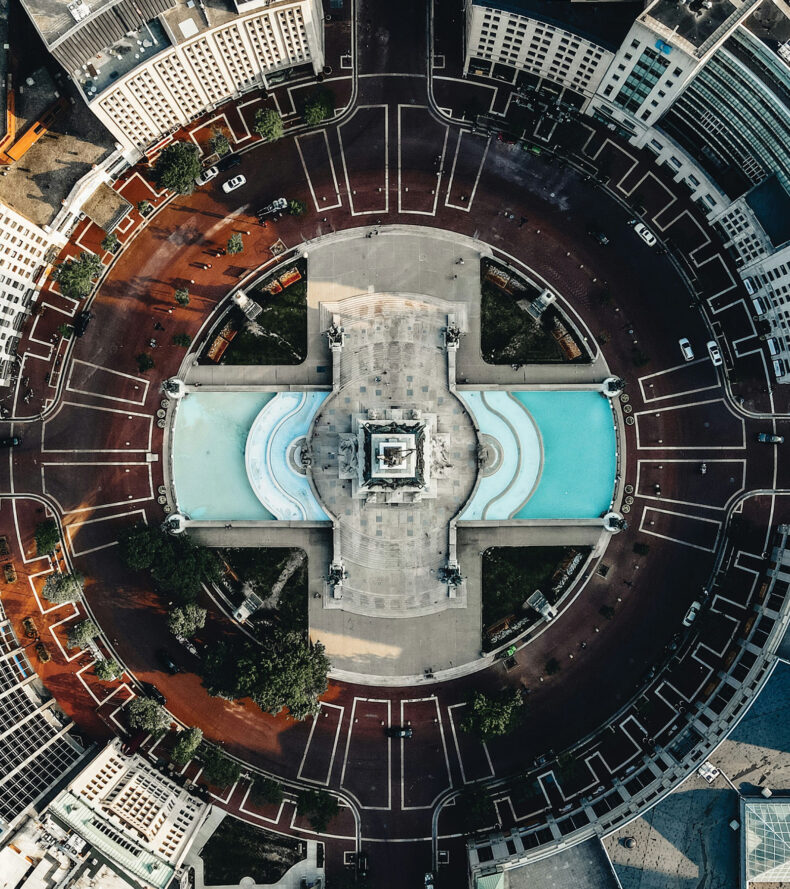
monument circle from above
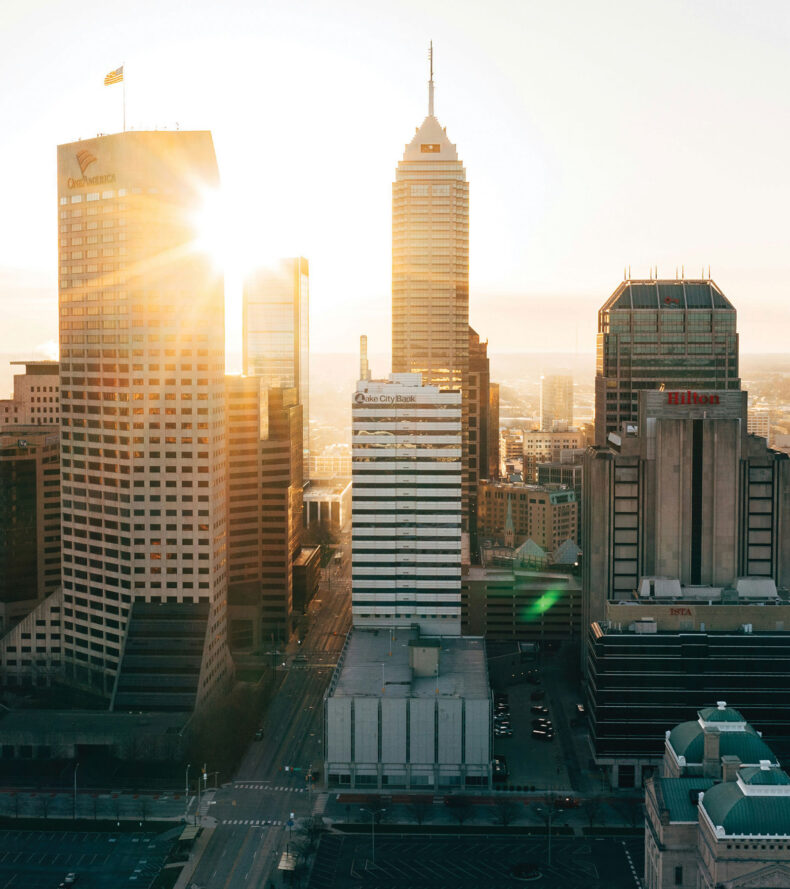
sunny indianapolis skyline

Indianapolis: A City Designed for Becoming

From the beginning, Indianapolis was a planned city—intentionally designed by Alexander Ralston as a one-square-mile plan around a central circle. 

On January 6, 1821, the Indiana General Assembly passed legislation establishing a new state capital with a clear vision: that it should be “advantageous to the state and to the prosperity of said town having specially in view the health, utility and beauty of the place.” 

Roughly one hundred fifty years later, in the 1970s city leaders were asking themselves what was next. They were eager to shake off a sleepy national reputation. They envisioned a vibrant city center, teeming with activity. A far cry from the largely empty streets of Naptown. 

What they did next changed the trajectory of the region for the next fifty years. The now-famous Indianapolis sports strategy was ambitious, but it was also grounded in reality. 

Indianapolis already had a well-designed downtown grid, a world-famous racing legacy and a deeply rooted basketball culture. City leaders built from that foundation, investing in the facilities, organizations and events that could turn those existing strengths into something much bigger.

They envisioned a future for Indianapolis. And then they deliberately built toward it.

Today, Indy is continuing to build on this strategy and asking itself what’s next once again. I believe the answer lies in tying our ambition to what’s already true.

Becoming requires a vision but not a blank slate. 

Imagine where you want to go. Then look back at what got you here. What is still true? What is worth carrying forward? And what are you ready to leave behind?

I’m still deciding who Jenn 2050 will be. But I know which parts of who I already am deserve to come with me.

At an inflection point?

Let’s define what’s worth carrying forward, and where you go next.

Contact Us