Client
A modern American amaro house that earned industry respect before it asked for consumer attention.

If you’ve ever had an Aperol Spritz, that summer hued bittersweet sparkler, you’ve encountered amaro. It’s just one of a number of centuries old, international icons (think Campari, Fernet Branca, Nonino, et. al.) representing this class of Italian liqueurs.

So when newcomers San Luigi Spirits sought to launch a modern amaro brand out of Saint Louis, they needed immediate credibility in a category defined by heritage. The brand had to stand confidently alongside global heavyweights, while carving its own trail. Every decision, from positioning to packaging to rollout, had to signal authority. And, importantly, the liquid had to deliver on that promise.

A Category with Standards

San Luigi entered a niche but growing category. 

While much of the American spirits market faces oversaturation and consolidation, amaro continues to grow. Aperol’s gargantuan marketing push to be the “Drink of Summer” accelerated awareness, but it was the bartenders, chefs, and industry professionals who initiated and continue to sustain it. 

The growth attracted casual entrants. Many domestic distilleries began adding amaro to portfolios already filled with gins, bourbons, vodkas, and RTD cocktails. Often, their bitter offerings felt like trend response rather than birthright. 

San Luigi took a different stance. 

Amaro demands focus, technical discipline, cultural fluency, and category respect. Its adoption flows through bartenders, beverage directors, and tastemakers who influence consumer demand. To succeed, San Luigi had to present itself as a dedicated house of Italian liqueur. It had to do what great brands do: focus. 
Services

Research
Strategy
Copywriting
Naming
Branding
Packaging
Collateral

Positioning with Discipline  

The strategy centered on authority through commitment.

We positioned San Luigi as a modern expression of the amaro tradition: grounded in family and Italian heritage and rooted in botanical exploration and local authenticity. The brand would feel culturally aware and contemporary at the same time. Our key principles included: 

  • Category Legitimacy: Signal deep understanding of amaro’s range and history without leaning on nostalgia or mimicry.
  • Focused Identity: Establish San Luigi as a brand built on Italian liqueurs. No trend chasing or mission creep.
  • Dual Heritage: The name translates to Saint Louis in Italian and honors the founder’s grandfather. We needed to tie the brand to both place and family without over relying on either.
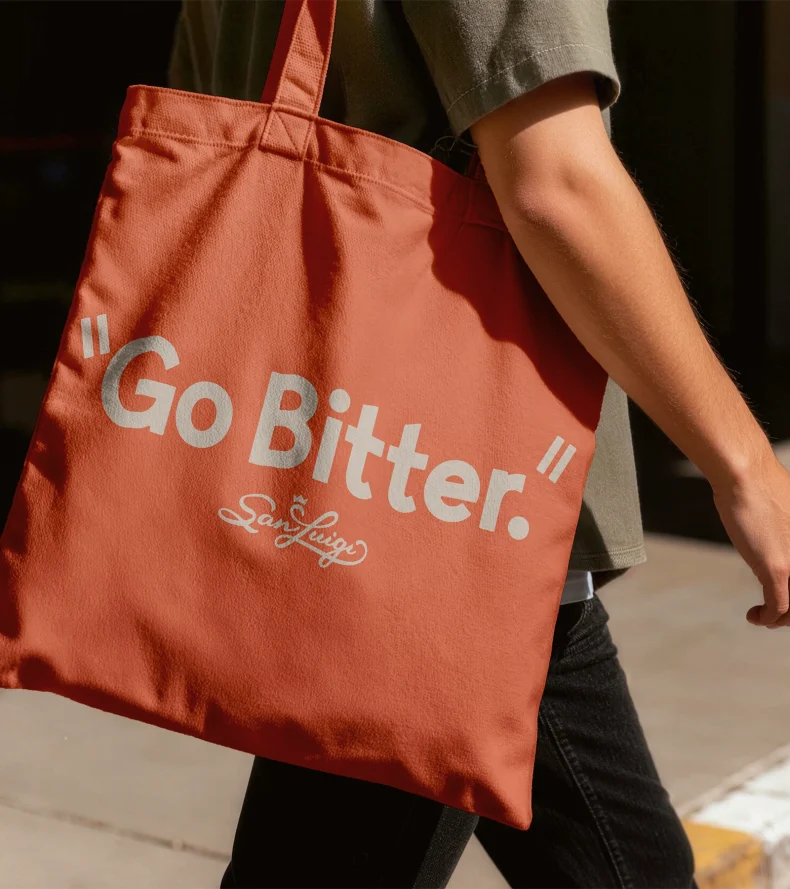
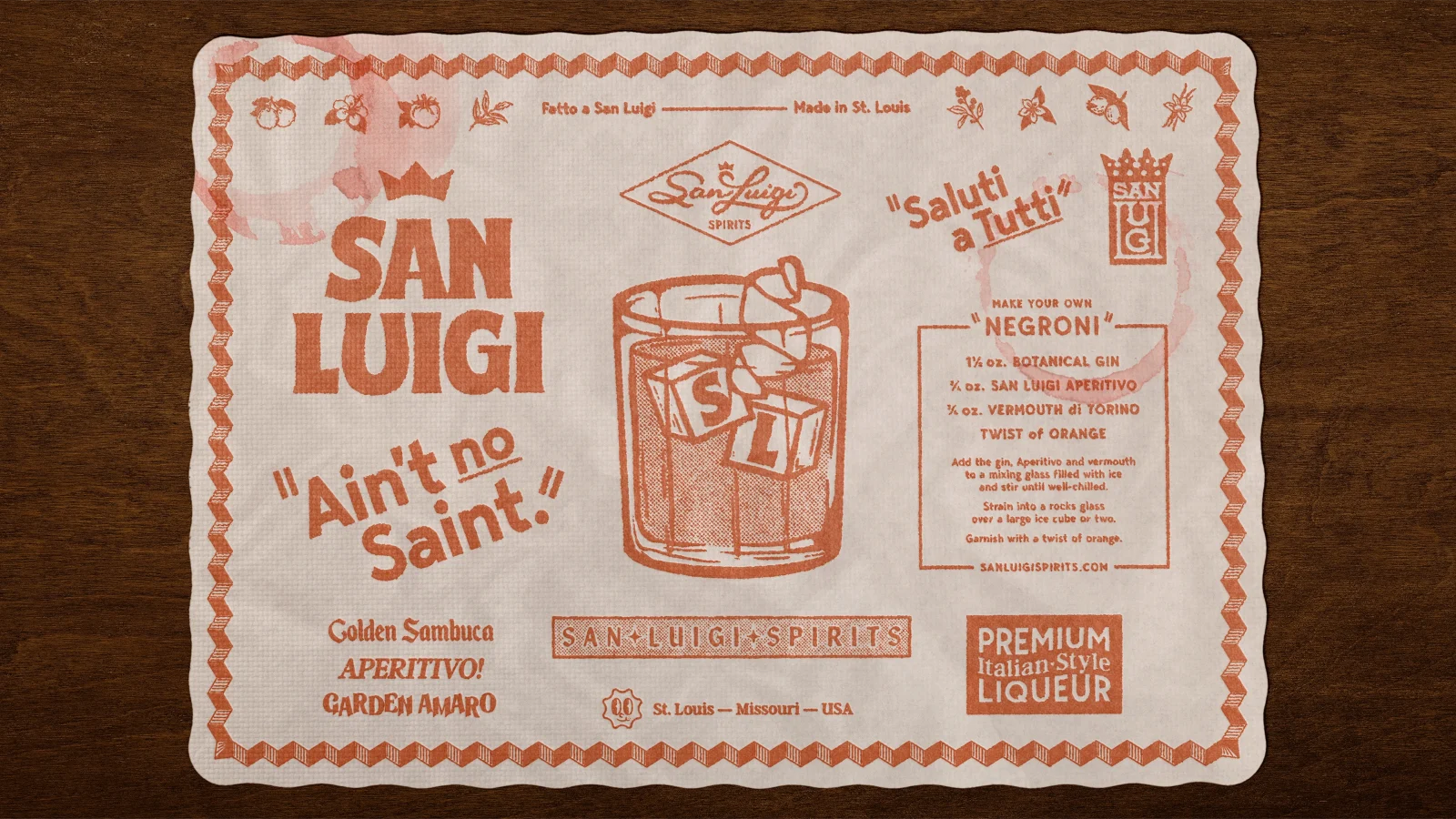
  • Authoritatively Playful: Create a visual and verbal identity with presence, structure, and levity. That meant bold color, layered typography, clear label architecture, and an irreverent personality. 

Identity with Intention

The identity carries weight without feeling heavy. 

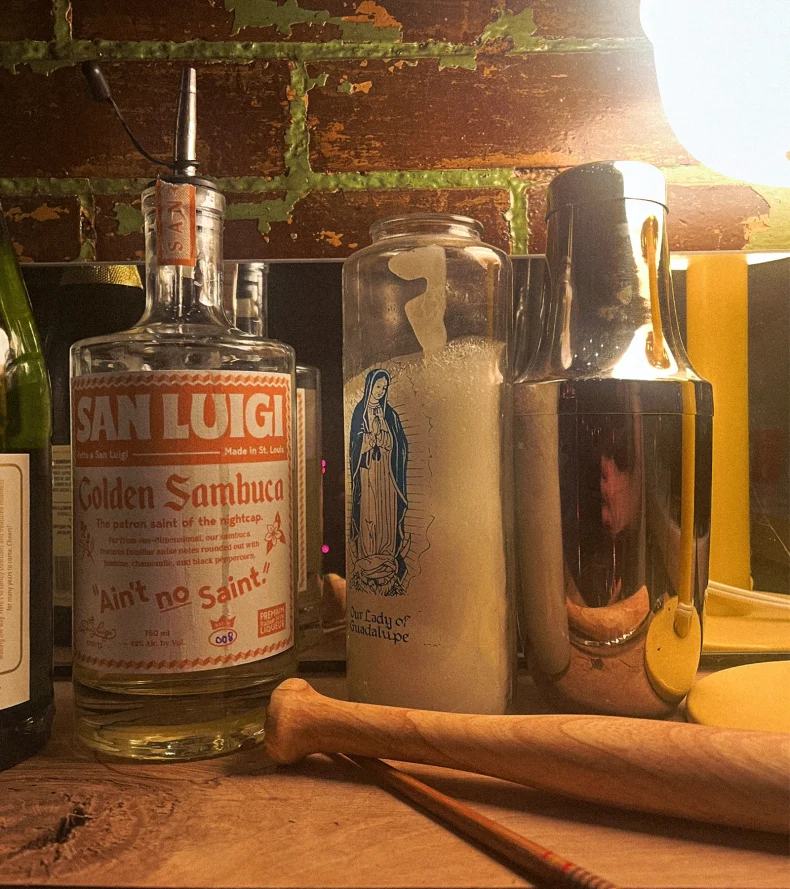
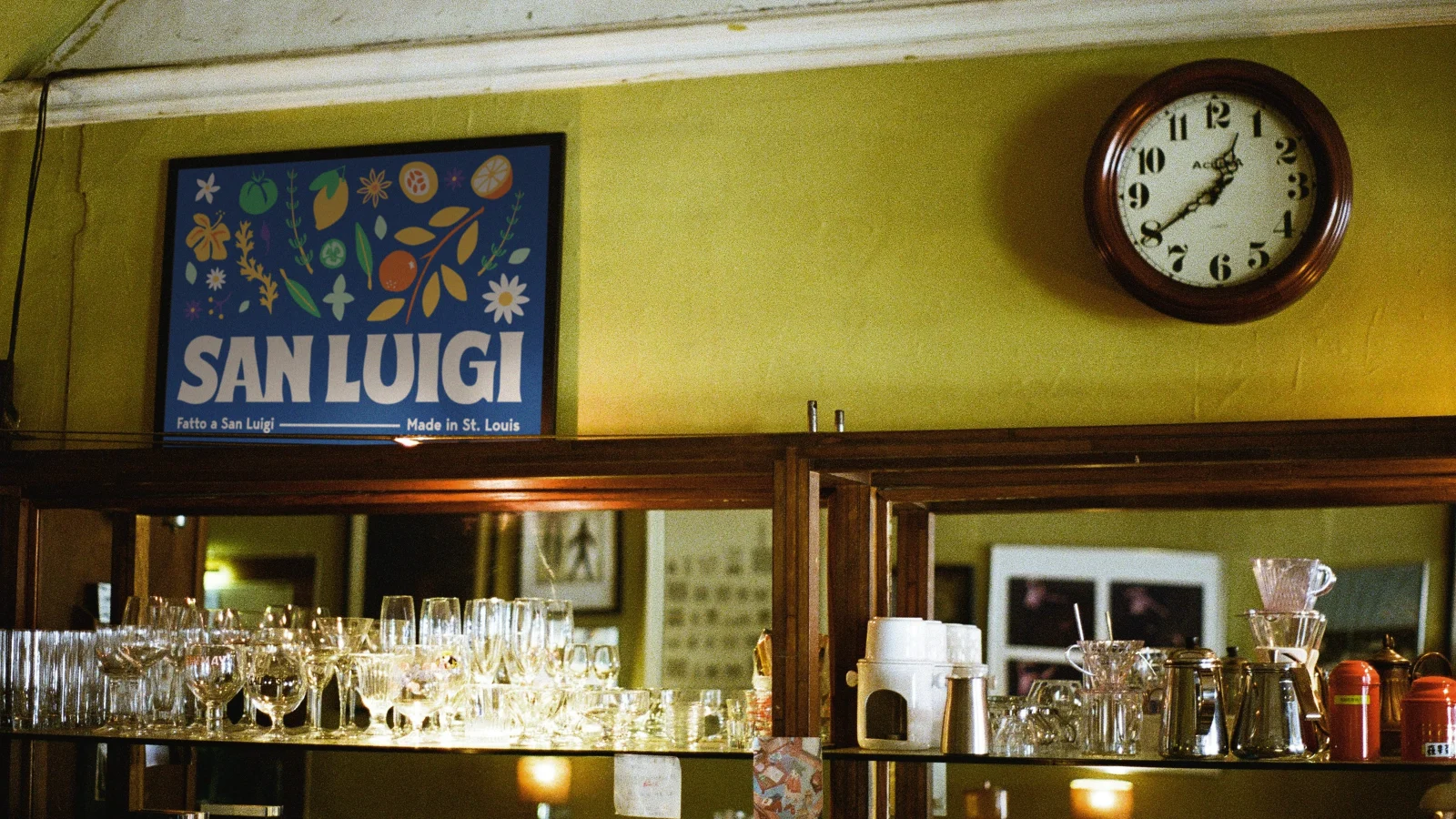
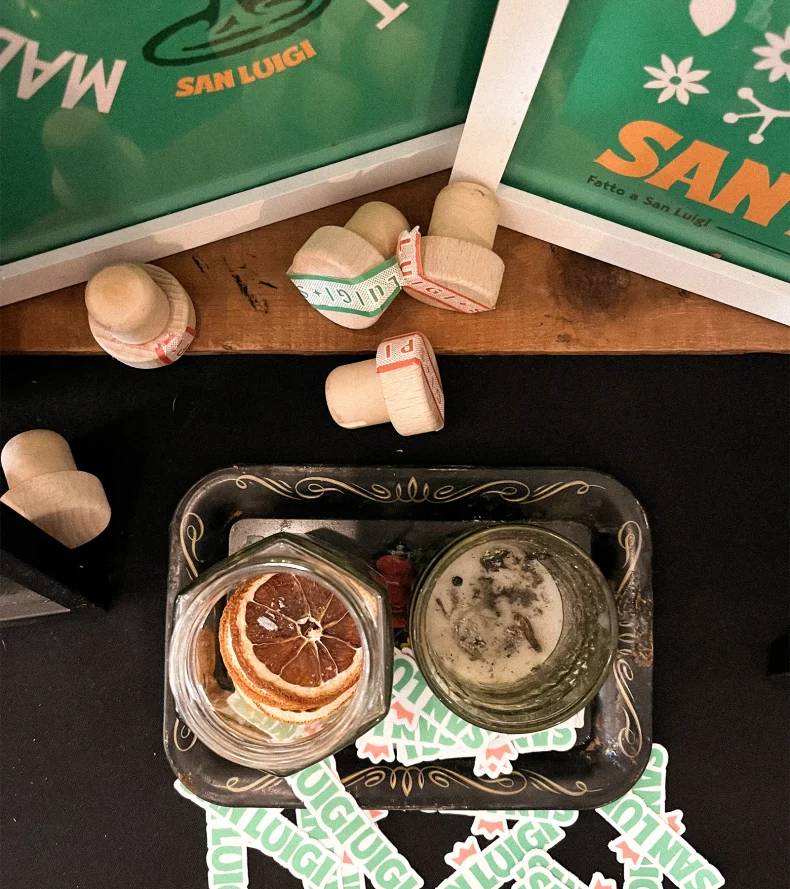
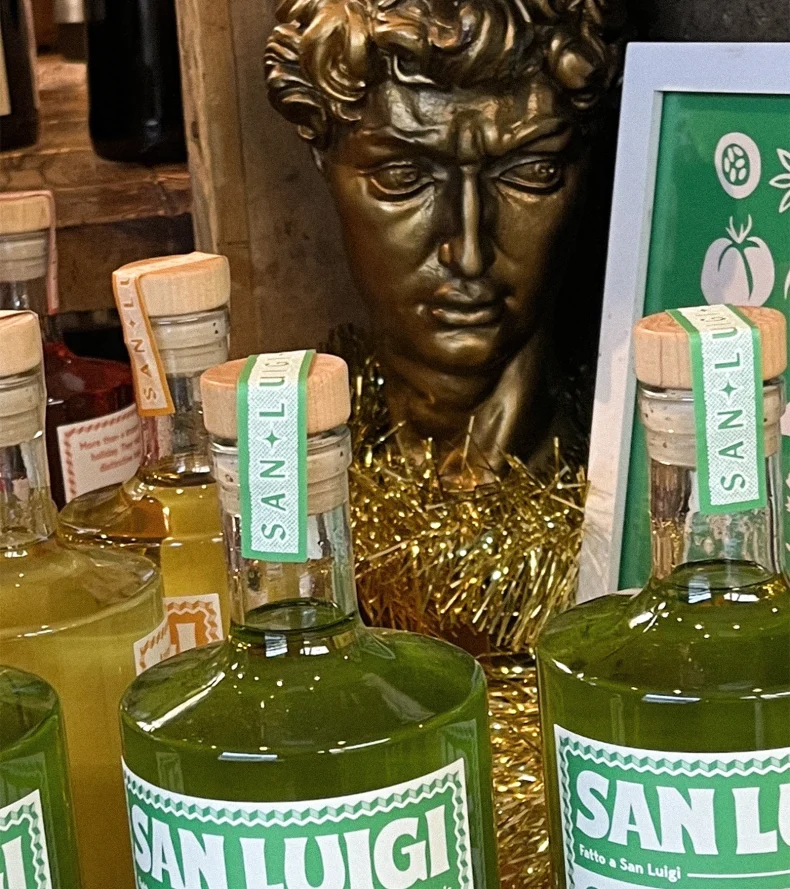
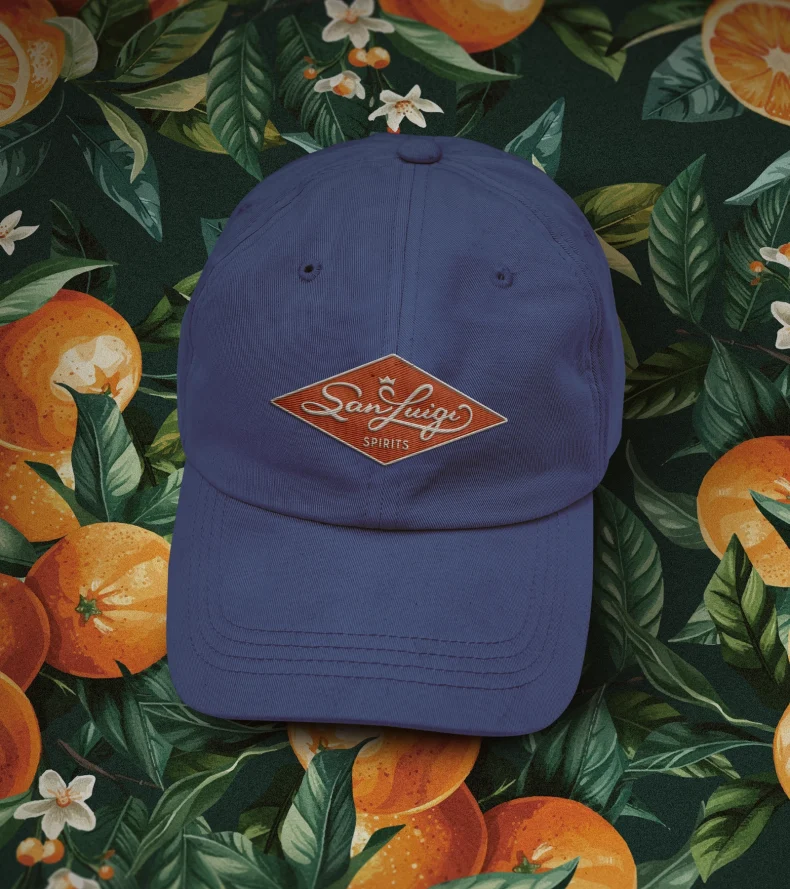
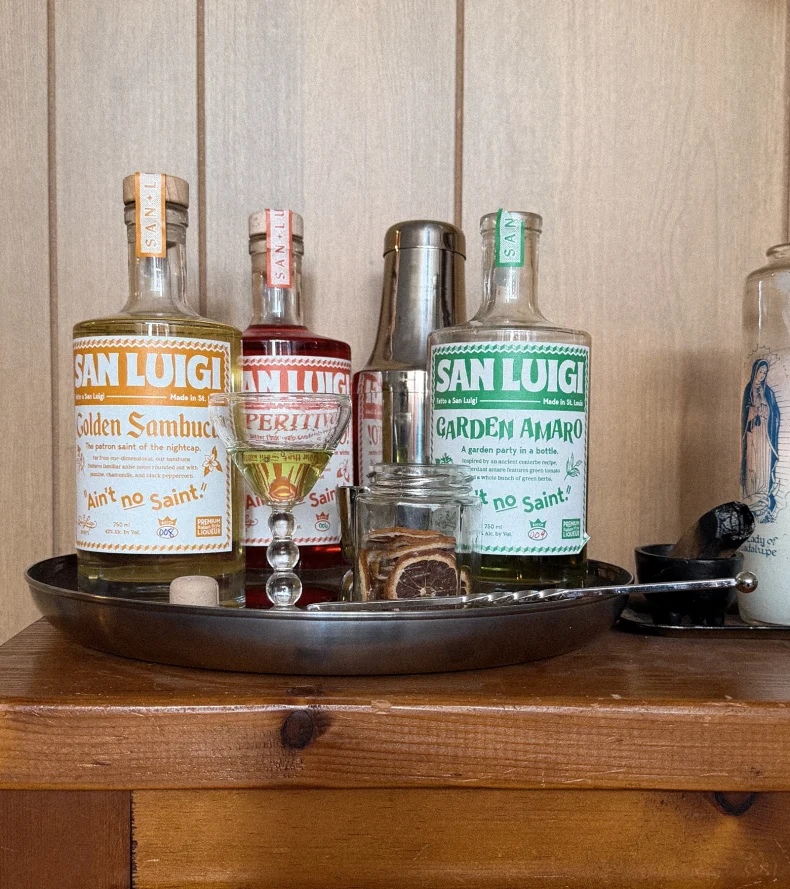
The visual language draws cues from historic amaro artwork while remaining modern. Saturated color palettes, assertive typography, botanical references, and multiple logo marks combine into a system that feels established and deliberate.

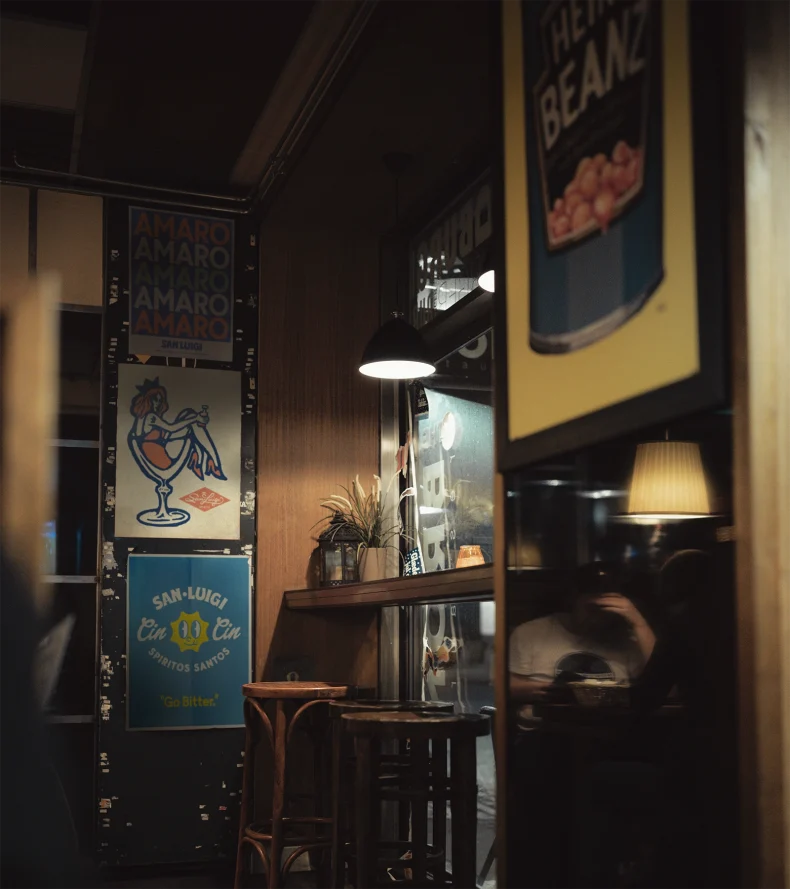
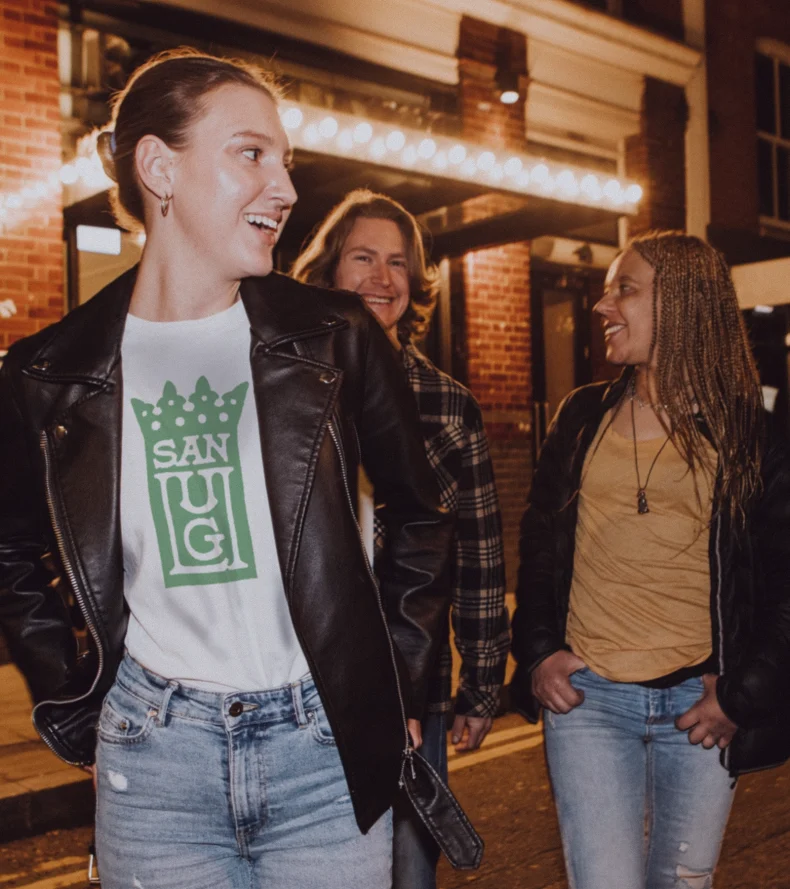
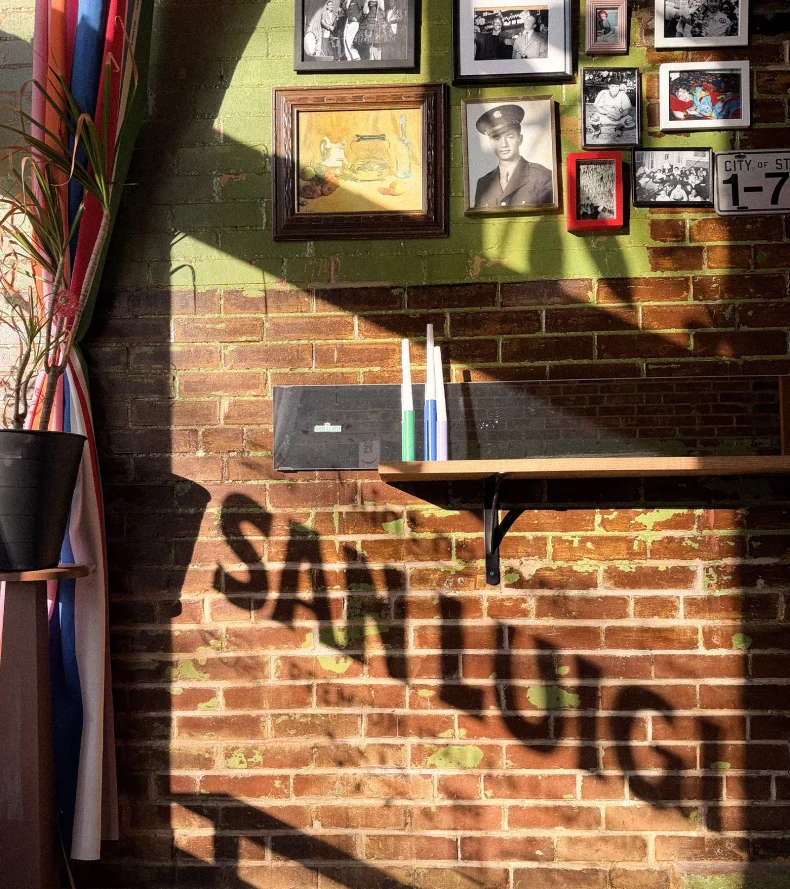
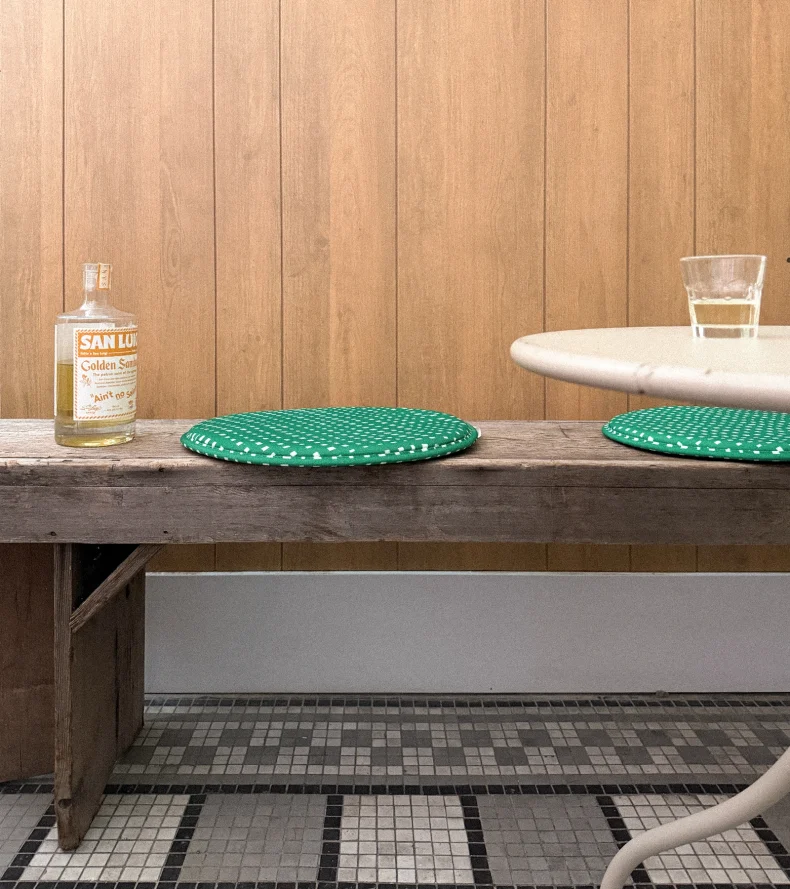
On the shelf or from a distance on the back bar, San Luigi reads as confident and composed. Up close, the intentionally maximalist structure signals depth and lineage. This naturally evolved across merchandise, social media, and experiential materials, with every element reinforcing the strategy. As a result, San Luigi already feels like it has stood the test of time.

The verbal identity sharpens this presence. The voice could not take itself too seriously, and the name once again gave us the perfect starting point. Baked into it was a certain duality: the sacred and the secular. Amaro doubles down on this tension. Historically made by monks and healers, amari were originally rather righteous tonics. Now? A shot of fernet is known as the bartender’s handshake. 

To this end, an early bit of copy drove the voice: “Made for saints and those who ain’t.” We leaned in and infused a certain irreverence and an ethos of holy idleness with Luigi-isms including “Saluti a Tutti,” “Do Less,” and “Ain’t No Saint.” 

Together, voice and visuals established clarity and composure in a complex category. 

Built Behind the Bar

In amaro, validation begins behind the bar.

Early market entry focused on respected culinary and cocktail programs across St. Louis. Within two months, San Luigi secured placement in more than 100 accounts including some of the city’s most respected restaurants, bars, and specialty retailers.

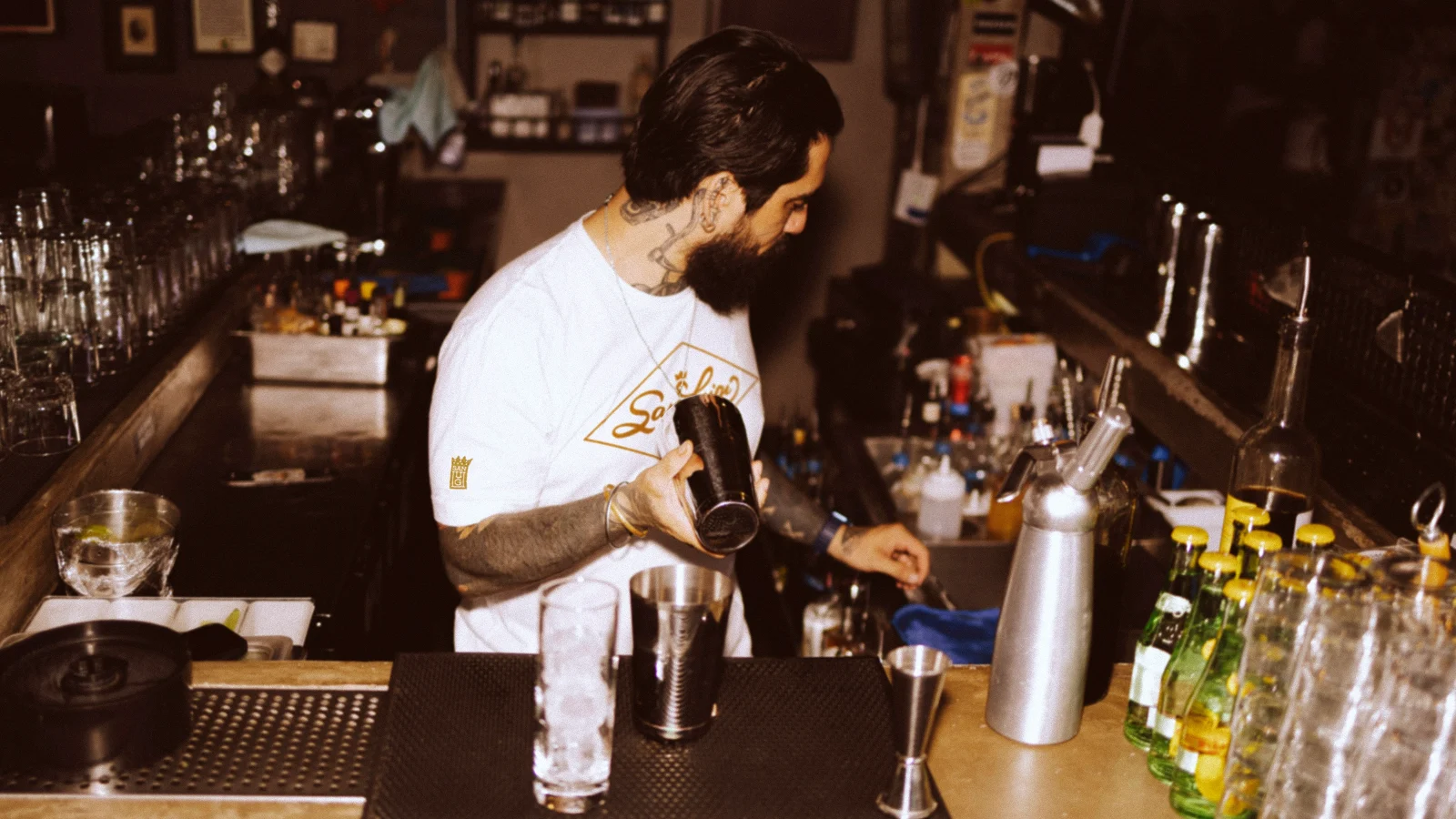
Momentum grew through real-world performance, targeted tastings, and bar and restaurant activations at industry spots like the Royale, Esca, and Aperi. At Urban Chestnut Brewing Company, the beverage team replaced Aperol with San Luigi Aperitivo in their Spaghett and Spritz. Bartenders began developing new concoctions and integrating the products into classic cocktails long associated with European imports. 

One notable bartender described customer behavior shifting quickly: “I have customers ordering a Last Word with the Garden Amaro, even though they know we have Chartreuse.”

Retail demand followed. Boutique bottle shops reported customers requesting the brand before it officially launched. As credibility grew, the broader market followed. A soft launch in Kansas City four months in expanded regional reach. Chain retail placement through Schnucks signaled more mainstream distribution confidence. And an upcoming activation at Major League Soccer’s Energizer Park will further extend cultural visibility.

Focus as Strategy

Amaro is a category built on conviction. Recipes are guarded, allegiances are strong, and consumer attention is driven by professionals with little patience for imitation. 

We built a brand that understood that reality from the start. Our job was to define how a new entrant could operate credibly in a landscape driven by heritage. San Luigi had to be fluent. So, the strategy established focus, the identity signaled permanence, and the product delivered on the promise.

San Luigi was built with a clear point of view and the discipline to express it consistently. The result is a modern American amaro brand that feels full-formed and intentional from every angle.

Categories with history require brands with conviction.

Ready to find your clarity?

Let us know.